This article may contain affiliate links. If you make a purchase through these links, we may earn a small commission at no extra cost to you. This helps us keep creating free content.

The Hercules Cluster M13: Observing a Globular Masterpiece
There are certain objects in the night sky that stop you in your tracks the first time you see them through a telescope. For me, the Great Globular Cluster in Hercules — Messier 13 — was one of those objects. I remember the moment vividly. I was at a public star party in the foothills west of Denver, looking through a borrowed 12-inch Dobsonian, and when M13 swam into focus I actually said "wow" out loud, which got a knowing laugh from the telescope’s owner. He had seen that reaction before.
M13 is often called the finest globular cluster visible from the Northern Hemisphere, and that reputation is well earned. It is a glittering ball of hundreds of thousands of ancient stars, packed together so densely that at its core, stars are separated by only fractions of a light-year. It is beautiful, it is accessible, and it tells a story about the Milky Way that stretches back nearly to the beginning of the universe itself. Here is your complete guide to observing and understanding this celestial masterpiece.
What Is a Globular Cluster?
Before we dive into M13 specifically, it helps to understand what globular clusters are and why they matter. Globular clusters are spherical collections of stars — typically hundreds of thousands to millions of individual suns — bound together by their mutual gravity into a dense, compact ball. They orbit the Milky Way in a halo that extends far above and below the galactic disk, following elongated paths that can take them through the disk and back out into the halo over hundreds of millions of years.

What makes globular clusters scientifically precious is their age. Most globular clusters formed very early in the history of the universe, roughly 10 to 13 billion years ago, when the Milky Way was still assembling itself from smaller fragments. They are among the oldest structures in our galaxy, and studying their stars gives us direct information about conditions in the early universe — the chemical composition of primordial gas, the initial mass function of stars, and the timeline of galaxy formation.
The Milky Way has about 150 known globular clusters, and each one is a unique laboratory for stellar astrophysics. Some are dense and concentrated, others are loose and sparse. Some have unusual chemical abundances that hint at exotic formation histories. M13 sits comfortably among the best and brightest, and its combination of richness, brightness, and favorable position in the sky makes it the globular cluster that most Northern Hemisphere observers see first.
M13: The Statistics
M13 was discovered by Edmond Halley in 1714 and later catalogued by Charles Messier in 1764. At magnitude 5.8, it is technically visible to the naked eye from a very dark site — appearing as a faint, fuzzy "star" — though most people find it with binoculars or a finder scope. Its angular diameter of about 20 arcminutes (two-thirds the diameter of the full Moon) means it is large enough to show considerable detail in telescopes of all sizes.
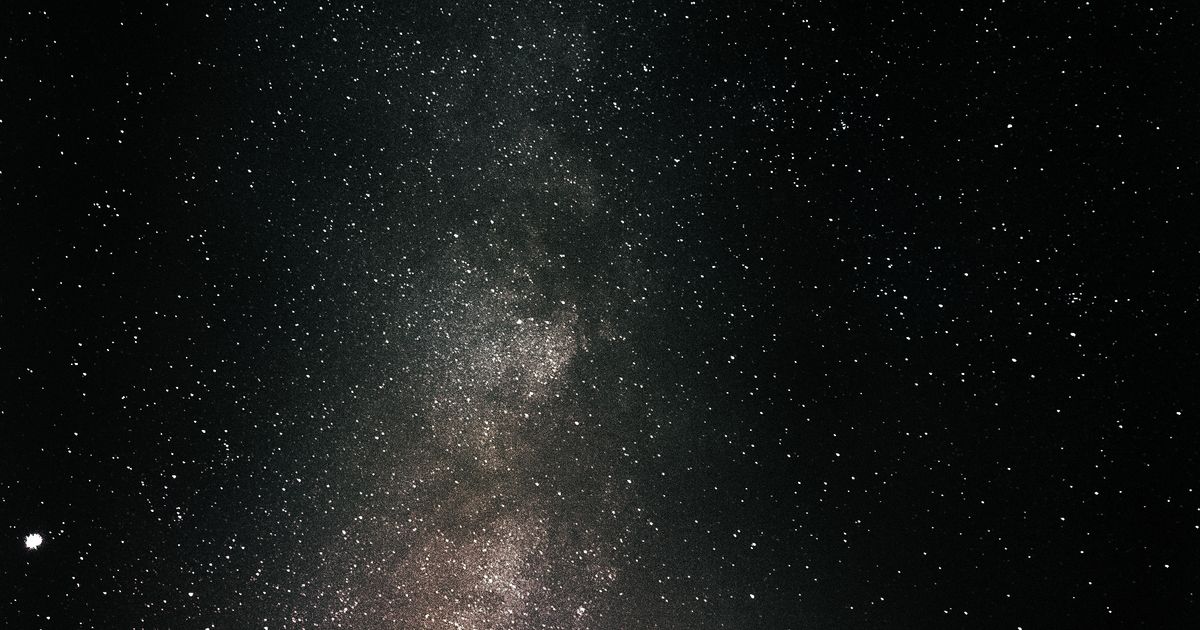
The cluster sits at a distance of approximately 22,200 light-years, which places it well within the Milky Way’s halo. Its true physical diameter is roughly 145 light-years, and it contains an estimated 300,000 stars. The core is incredibly dense — within the central few light-years, stars are packed hundreds of times more closely than in our solar neighborhood. If you lived on a planet orbiting a star near the core of M13, the night sky would be ablaze with thousands of brilliant stars, and there would be no true darkness.
How to Find M13
Finding M13 is straightforward once you know the trick. The cluster sits in the Keystone asterism of Hercules — a trapezoidal pattern of four moderately bright stars (Eta, Zeta, Epsilon, and Pi Herculis) that represents the body of the mythological hero. M13 lies along the western side of the Keystone, about one-third of the way from Eta to Zeta Herculis.
To locate the Keystone, start from the brilliant star Vega (the brightest star in the summer sky) and look roughly west-southwest. The Keystone is a slightly lopsided rectangle of stars between magnitude 2.8 and 3.5. Once you have identified the Keystone, point your finder scope or binoculars at the line between Eta and Zeta Herculis, and M13 will appear as a distinctly fuzzy spot about one-third of the way from Eta toward Zeta.
If you are using a go-to telescope, simply dial in M13 (or NGC 6205) and the mount will take you right there. But I would encourage you to try finding it manually at least once — the process of star-hopping to a deep-sky object is a skill worth developing, and the satisfaction of finding M13 on your own adds immeasurably to the experience. Our telescope guide discusses different mount types and their implications for finding objects.

Observing M13 at Different Magnifications
Naked Eye and Binoculars
From a truly dark site (Bortle 3 or better), M13 is visible to the naked eye as a small, hazy spot. It is a satisfying detection that confirms your site is genuinely dark. In binoculars (7×50 or 10×50), M13 appears as a bright, round, unresolved fuzzy ball — clearly not a star, but not yet showing individual stars. Even at this level, it is lovely, and you can appreciate its size and brightness relative to the surrounding star field.
Small Telescopes (60–100mm)
In a small telescope at moderate magnification (50–100×), M13 begins to reveal its true nature. The edges of the cluster start to show a granular texture — a sparkling, sugary quality that hints at the individual stars just beyond the threshold of resolution. The core remains a smooth, bright glow, but the outer regions begin to break into distinct points of light. This is the moment when many beginners realize they are looking at something extraordinary.
Medium Telescopes (150–200mm)
At 6 to 8 inches of aperture, M13 becomes genuinely spectacular. Dozens to hundreds of individual stars are resolved across the cluster’s face, with the core still unresolved but showing a complex, mottled texture. Curved chains and lanes of stars become apparent, giving the cluster a three-dimensional quality that photographs cannot fully capture. Magnifications of 100× to 200× work well, depending on seeing conditions.
One of the most famous features of M13 is the so-called "propeller" — a Y-shaped pattern of three dark lanes radiating from near the center of the cluster, first noted by the astronomer Bindon Stoney in the 19th century. The propeller is visible in telescopes of 8 inches and larger under good seeing conditions, and spotting it is a popular observing challenge. It is not a true physical feature — just an arrangement of stars that creates the illusion of dark gaps — but it is a satisfying thing to see.

Large Telescopes (250mm+)
In a large Dobsonian or Schmidt-Cassegrain telescope, M13 is breathtaking. Stars are resolved all the way into the dense core, and the cluster fills the eyepiece with thousands of individual points of light arranged in intricate patterns. The effect at high magnification (200–400×) is like looking into a box of diamonds under a jeweler’s lamp. The three-dimensional impression is overwhelming — you can almost sense the depth of the cluster, with brighter foreground stars standing out against the shimmering background of fainter, more distant members.
Photographing M13
M13 is one of the most photogenic deep-sky objects in the sky, and it is an excellent target for astrophotographers at all levels. The cluster is bright enough that even relatively short exposures (30 seconds to 2 minutes per frame) will produce a recognizable image, while longer total integration times reveal the full extent of the cluster’s outer halo and the faintest resolved stars.
A focal length of 1000 to 2000mm works well for framing M13 at a useful image scale. At shorter focal lengths, the cluster appears small but can be nicely composed with the surrounding star field. Color cameras will reveal the subtle color differences among M13’s stars — most are yellow or orange (evolved red giant stars), but some are distinctly blue (horizontal branch stars and blue stragglers that have been rejuvenated through stellar mergers or mass transfer).
Processing M13 images requires care to avoid blowing out the dense core while still revealing the faint outer stars. Techniques like HDR blending (combining short and long exposures) can help render the full dynamic range of the cluster. Our astrophotography beginner’s guide covers the fundamentals of stacking, processing, and extracting detail from deep-sky images.
The Science of M13
M13 has been studied intensively by professional astronomers for over a century, and it continues to yield new discoveries. One of the most important findings is the cluster’s age: about 11.65 billion years, making it one of the older objects in the Milky Way. Its stars formed from gas that was much less enriched with heavy elements than the gas from which our Sun formed, reflecting the chemical youth of the early universe.
The cluster contains several unusual types of stars that are found preferentially in globular clusters. Blue stragglers — stars that appear younger and hotter than they should be given the cluster’s age — are thought to form through stellar mergers or mass transfer in close binary systems. M13 has an unusually large population of blue stragglers, suggesting that stellar interactions in its dense core are particularly active.
M13 also contains a small number of pulsars — rapidly spinning neutron stars — which were likely formed from the collapsed cores of massive stars that lived and died in the cluster billions of years ago. The detection of pulsars in globular clusters has been an important discovery, because it reveals the kinds of exotic stellar remnants that accumulate in these ancient systems over cosmic time.
Perhaps the most famous footnote in M13’s history is the Arecibo message. In 1974, astronomers used the Arecibo radio telescope in Puerto Rico to beam a coded message toward M13, containing basic information about humanity, our solar system, and our DNA. The message will take about 22,000 years to reach the cluster, and any hypothetical beings orbiting a star in M13 would need another 22,000 years to reply. It was more of a symbolic demonstration of radio telescope capability than a serious attempt at communication, but it cemented M13’s place in popular culture.
M13 and Its Neighbor M92
While you are in the neighborhood, do not miss Messier 92 (NGC 6341), another globular cluster in Hercules that sits about 9 degrees northeast of M13. M92 is a superb cluster in its own right — magnitude 6.3, about 26,000 light-years distant, and arguably even older than M13 at roughly 12–13 billion years. In any other constellation, M92 would be the star attraction. It suffers only from the unfortunate luck of being in the same constellation as M13, which overshadows it.
Observing M13 and M92 in the same session is a rewarding exercise in comparison. M92 is slightly smaller and more concentrated than M13, with a blazingly bright core and a more compact outer halo. The two clusters make an excellent pair for understanding how globular clusters can differ in structure and concentration despite being broadly similar in mass and age.
If globular clusters capture your imagination, the Milky Way has many more to explore. Our guide to the best Messier objects for beginners includes several other globular clusters accessible in small telescopes. And for a broader understanding of what makes different deep-sky objects tick, exploring the types of galaxies that surround our Milky Way puts globular clusters in the context of the universe’s large-scale structure.
M13 is the kind of object that gets better every time you observe it. Your first view might be a fuzzy ball in binoculars. Your hundredth view, through a large telescope on a perfect summer night, might resolve thousands of individual stars in a sparkling sphere that seems to hover in three-dimensional space. Each time, you are looking at a family of stars that has been together for nearly 12 billion years — a relic of the universe’s youth, still shining, still magnificent. That is the kind of thing that makes you glad you stepped outside and looked up.
About the Team
The Visit Astronomy Team
We're amateur astronomers and science communicators who make the night sky accessible to everyone. We write about telescopes, stargazing tips, and celestial events.
You might also like

The Pinwheel Galaxy M101: A Face-On Spiral Beauty
M101 is one of the largest and most photogenic face-on spiral galaxies. Learn how to observe the Pinwheel Galaxy, what makes its asymmetric arms so fascinating, and how to photograph it.

The Gemini Constellation: Stars, Myths & What to See
Gemini is one of the most recognizable winter constellations, home to twin bright stars, a spectacular open cluster, and a famous meteor shower. Explore the mythology, key stars, and deep-sky objects of the Twins.

The Large Magellanic Cloud: Our Nearest Galactic Neighbor
The Large Magellanic Cloud is the closest major galaxy to the Milky Way, visible to the naked eye from the Southern Hemisphere. Explore its structure, the Tarantula Nebula, Supernova 1987A, and how to observe this galactic companion.
Explore more
All articles on Visit Astronomy →
The Night Sky, Delivered
New guides, celestial events, and astrophotography tips — every week in your inbox.
🎁 Free bonus: Beginner Stargazing Checklist (PDF)