This article may contain affiliate links. If you make a purchase through these links, we may earn a small commission at no extra cost to you. This helps us keep creating free content.

Observing Uranus and Neptune: The Ice Giants in Your Telescope
Most amateur astronomers are intimately familiar with Jupiter, Saturn, Mars, and Venus. These worlds are bright, easy to find, and deliver instant gratification through any telescope. But the solar system doesn't end at Saturn. Two more worlds lie beyond, Uranus and Neptune, and observing them is a distinctly different and surprisingly rewarding experience.
Let me be honest with you: these are not planets that will dazzle you with surface detail. What they offer instead is something subtler, the quiet thrill of finding an incredibly distant world with your own eyes, confirming its identity, and perhaps catching the pale blue-green hue that sets them apart from every star in the field.
The Challenge: They Look Like Stars
Uranus and Neptune are so far away that even in a telescope, they appear as tiny disks, barely distinguishable from background stars at first glance. Uranus has an apparent diameter of about 3.7 arcseconds at opposition. Neptune is even smaller at roughly 2.3 arcseconds. For comparison, Jupiter at opposition spans about 49 arcseconds, over 13 times wider than Uranus.

This means the real challenge isn't seeing them, it's identifying them. At the eyepiece, you're looking for the one "star" in the field that doesn't look quite right.
Uranus: Magnitude ~5.7 at opposition. Technically visible to the naked eye from a dark site, but extremely difficult to pick out among surrounding stars without a chart.
Neptune: Magnitude ~7.8 at opposition. Invisible to the naked eye. Requires binoculars or a telescope to see at all, and a good chart to identify.
How to Find Uranus
Celestron Astro Night Vision Red Flashlight
Variable-output dual red LEDs, square anti-roll body, 9V powered, preserves dark adaptation while reading charts.
See on Amazon →Uranus moves slowly against the background stars, shifting only about 4 degrees per year. This means it stays in the same constellation for years at a time. To find it on any given night:

- Get current coordinates. Use a planetarium app like Stellarium (our Stellarium guide covers setup in detail), SkySafari, or an online ephemeris. These will show you exactly where Uranus sits relative to nearby stars.
- Star-hop to the field. Using a detailed finder chart, star-hop from a bright reference star to the field containing Uranus. At this stage, you're working with binoculars or a finderscope.
- Identify the impostor. Compare the view through your eyepiece with the chart. One of the "stars" in the field is Uranus. At low power (40-60x), it may look identical to the surrounding stars.
- Increase magnification. Switch to higher power (150x or more). The true stars will remain sharp pinpoints. Uranus will show a tiny, distinctly blue-green disk, soft and slightly fuzzy compared to the stellar points around it. That's your planet.
How to Find Neptune
Neptune is fainter and smaller than Uranus, making it a bigger challenge. The process is the same, chart, star-hop, identify, but you need more magnification to confirm the disk.
- Get a detailed chart. Neptune is magnitude 7.8, so there will be many stars of similar brightness in the field. A chart showing stars down to magnitude 9 or 10 is essential. Print it or display it on a red-screened phone.
- Star-hop carefully. Neptune moves even more slowly than Uranus (about 2 degrees per year), so a chart from within the same month will be accurate. Work from the nearest bright star visible in your finderscope.
- Crank up the magnification. At 200x or more, Neptune reveals a tiny blue disk, slightly deeper and bluer in color than Uranus. The disk is small enough that you may need steady seeing to confirm it.
What You'll See at the Eyepiece
| Detail | Uranus | Neptune |
|---|---|---|
| Apparent size | ~3.7" | ~2.3" |
| Brightness | Mag 5.7 | Mag 7.8 |
| Color | Blue-green / aquamarine | Deep blue |
| Disk visible at | 100x+ (easy at 150x) | 150x+ (confirm at 200x) |
| Surface detail | None visually (featureless disk) | None visually |
| Moons visible | Titania & Oberon in 10"+ scopes | Triton in 8"+ scopes |
| Min. telescope | 50mm refractor or binoculars | 60mm+ telescope |
When to Observe: Opposition Seasons
Like all outer planets, Uranus and Neptune are best observed near opposition, when they're opposite the Sun in our sky and visible all night. At opposition, they're closest to Earth, brightest, and largest.
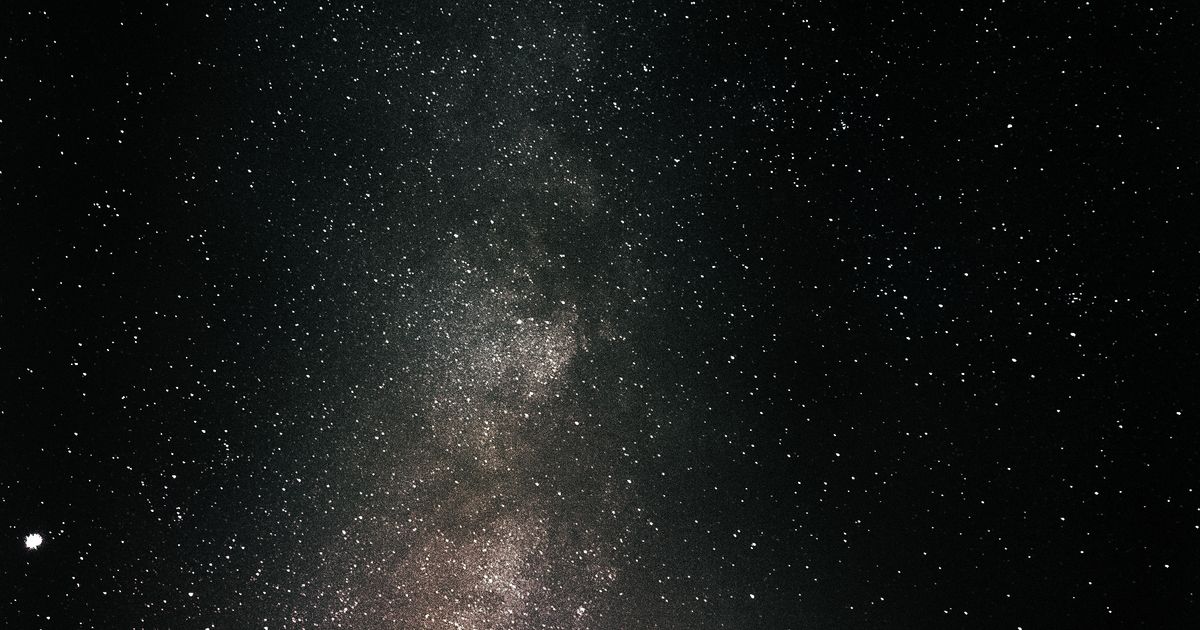
Both planets reach opposition once a year (Uranus in November, Neptune in September, approximately, the dates shift slowly each year). But they're observable for months around opposition, so you have a generous window. Check a planetarium app or our planets visible tonight guide for current visibility.
The Satisfaction of the Distant
Observing Uranus and Neptune is a different kind of astronomy. There's no instant gratification, no bands, no rings, no craters. What there is, instead, is the knowledge that the faint blue dot in your eyepiece is a world 1.8 billion miles away (Uranus) or 2.8 billion miles away (Neptune). Light from Neptune takes over four hours to reach your eye. You're seeing a planet so distant that the Sun, from its surface, would appear as just a very bright star.
If you've observed all five of the classical planets, Mercury, Venus, Mars, Jupiter, and Saturn, adding Uranus and Neptune completes the set. You'll have seen every major world in our solar system with your own eyes. That's something worth doing.
Published by the Visit Astronomy editorial team. Published October 1, 2026.
Editorial responsibility: see Imprint.
Spotted an error or have something to add? corrections@visitastronomy.com
You might also like

Observing Venus: Phases, Transits, and Best Times
Venus is the brightest planet in the sky and shows beautiful crescent phases through a telescope. Here's everything you need to know to observe our nearest planetary neighbor.

Exoplanets: What Backyard Astronomers Can Observe
You don't need a space telescope to detect exoplanets. With a modest telescope and careful technique, you can measure the light dip when a planet crosses its host star.

The North America Nebula NGC 7000: A Hidden Giant Near Deneb
The North America Nebula is one of the largest nebulae in the sky — so large that you can't see it through a telescope. Here's how to find, photograph, and appreciate this remarkable emission nebula hiding in plain sight near Deneb.
Explore more
All articles on Visit Astronomy →
The Night Sky, Delivered
New guides, celestial events, and astrophotography tips — every week in your inbox.
🎁 Free bonus: Beginner Stargazing Checklist (PDF)