This article may contain affiliate links. If you make a purchase through these links, we may earn a small commission at no extra cost to you. This helps us keep creating free content.

Autumn Night Sky Guide: What to See September to November
Autumn is when the night sky shifts from the Milky Way-dominated summer to something quite different. The dense star fields of Sagittarius and Scorpius sink toward the western horizon, and in their place rises a sky dominated by galaxies. The area around Pegasus, Andromeda, and Pisces sits well away from the plane of our galaxy, giving you a clear window into deep space. Combined with longer nights, cooler (steadier) air, and often excellent transparency, autumn is one of the best seasons for astronomy.
The Signature Pattern: The Great Square of Pegasus
Your orientation guide for autumn evenings is the Great Square of Pegasus, four stars forming a large, distinctive square high in the eastern sky after dark in September, and nearly overhead by November. It's not as instantly recognizable as the Big Dipper, but once you find it, it becomes your launching point for everything else.
Here's how to locate it:
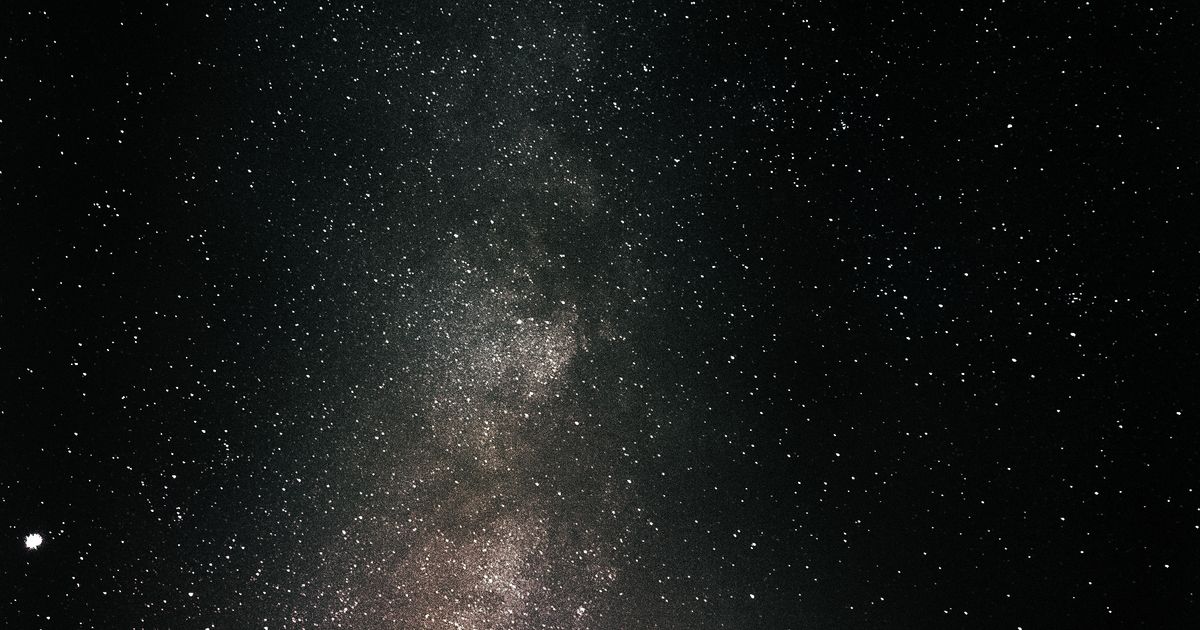
- Face east to southeast after dark in September (or south in October-November).
- Look for a large, nearly perfect square of four moderately bright stars. The square spans roughly 15 degrees on a side, about the width of your fist at arm's length.
- The interior of the square is notably empty, very few stars are visible inside it to the naked eye. This emptiness makes it distinctive.
Top Autumn Targets
Sky & Telescope's Pocket Sky Atlas
Compact star atlas for finding deep sky targets at the eyepiece.
See on Amazon →The Andromeda Galaxy (M31)
The Andromeda Galaxy is the showpiece of autumn. At 2.5 million light-years away, it's the most distant object easily visible to the naked eye, a faint, fuzzy smudge from a dark site, but through binoculars or a telescope, it reveals a bright core surrounded by an extended halo of light.

In a telescope at low magnification, you can spot its two brightest satellite galaxies, M32 and M110, flanking the main galaxy. Under dark skies with an 8-inch or larger telescope, dust lanes become visible in the disk. For a full exploration, see our complete Andromeda guide.
The Perseus Double Cluster (NGC 869 & NGC 884)
One of the most breathtaking sights in the sky through binoculars or a low-power eyepiece. Two rich open star clusters sit side by side, each containing hundreds of young, bright stars. They're located between Perseus and Cassiopeia, and on a clear night, you can see them as a hazy patch with the naked eye.
Through a wide-field telescope at 30-50x, both clusters fill the field of view with dozens of resolved stars. Scattered among them are several orange and red giant stars that add striking color contrast to the blue-white majority.
The Triangulum Galaxy (M33)
The third-largest member of our Local Group (after the Milky Way and Andromeda), M33 is a face-on spiral galaxy about 2.7 million light-years away. It's tricky because it has a very low surface brightness, its light is spread over a large area. Under dark skies, it's visible in binoculars as a faint, diffuse glow. Under light-polluted skies, it can be invisible even in a telescope.
The key to M33 is low magnification and dark skies. In an 8-inch scope under excellent conditions, you can trace the spiral arms and spot the bright H-II region NGC 604, a giant nebula inside another galaxy.
More Autumn Highlights
| Object | Type | Constellation | Notes |
|---|---|---|---|
| M15 | Globular cluster | Pegasus | Dense, bright, partially resolvable in 6-inch scopes. Contains a planetary nebula (Pease 1) at its center. |
| NGC 7331 | Spiral galaxy | Pegasus | Often called the "Milky Way's twin." A beautiful inclined spiral with smaller galaxies nearby (Stephan's Quintet). |
| M52 | Open cluster | Cassiopeia | Rich cluster near the Bubble Nebula. Nice in small scopes. |
| NGC 457 (Owl/ET Cluster) | Open cluster | Cassiopeia | Two bright "eyes" give it a distinctive owl or alien appearance. A crowd favorite at star parties. |
| The Pacman Nebula (NGC 281) | Emission nebula | Cassiopeia | Faint visually but a superb astrophotography target in H-alpha. |
Summer Holdovers
Early autumn evenings still offer views of late-summer favorites before they set in the west. You'll have a few more weeks with:
- The Summer Triangle, Vega, Deneb, and Altair, still high in the west, with targets like Albireo, the famous double star, and the Dumbbell Nebula (M27) well-placed.
- The Milky Way, still visible from Cygnus through Cassiopeia and into Perseus, offering rich star fields and dark nebulae for binocular scanning.
- Saturn and Jupiter, often well-placed in autumn evenings, depending on the year. Check what's visible tonight for current positions.
Planning Your Autumn Sessions
The key advantage of autumn is longer nights. By late October, astronomical darkness arrives by 7 PM in mid-northern latitudes, giving you potentially 12 hours of observing time. You don't need all of it, but the luxury of starting early and ending at a reasonable hour makes autumn one of the most comfortable seasons for astronomy.
Evening temperatures are dropping, though, so layer up. Cold hands and feet end more observing sessions than clouds do. A thermos of something warm and a good pair of gloves make a bigger difference than any eyepiece upgrade.
Published by the Visit Astronomy editorial team. Published August 18, 2026. Updated September 12, 2026.
Editorial responsibility: see Imprint.
Spotted an error or have something to add? corrections@visitastronomy.com
You might also like

Taurus Constellation: Aldebaran, Pleiades, and the Crab
Taurus is one of the richest constellations in the night sky, home to Aldebaran, the Pleiades, the Hyades, and the Crab Nebula. Here's everything you need to find and explore it.

Your Complete Guide to Watching the Perseid Meteor Shower
The Perseids are the most reliable and spectacular meteor shower of the year. Here's everything you need to know to plan the perfect viewing session — timing, location, and what to expect.

Ursa Major: More Than Just the Big Dipper
Everyone knows the Big Dipper, but Ursa Major is a much larger constellation packed with galaxies, double stars, and hidden treasures. Here's the complete guide.
Explore more
All articles on Visit Astronomy →
The Night Sky, Delivered
New guides, celestial events, and astrophotography tips — every week in your inbox.
🎁 Free bonus: Beginner Stargazing Checklist (PDF)